


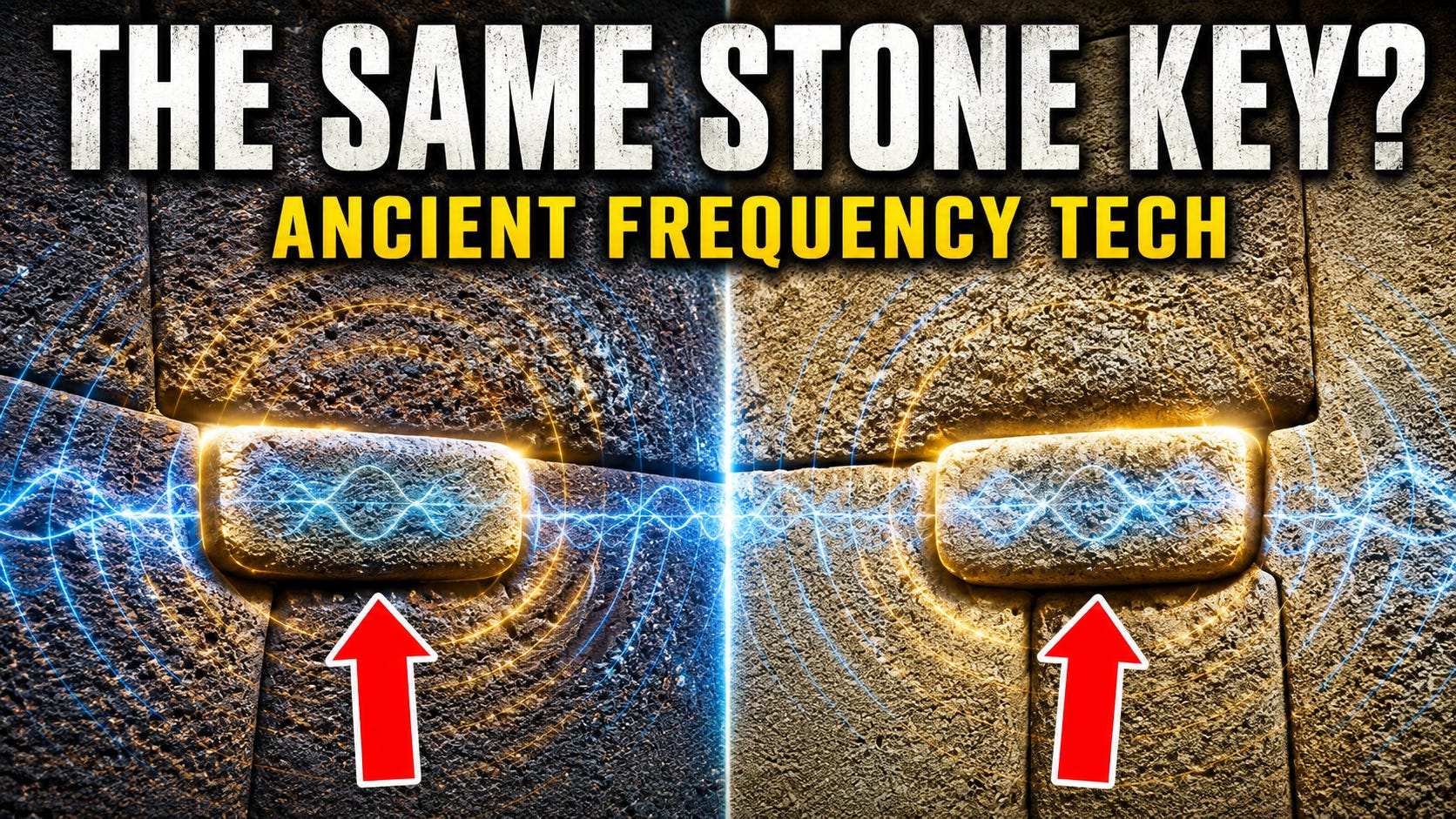
The image highlights similar rectangular protrusions embedded within precision stone walls on Rapa Nui and in Peru. Ahu Vinapu on Easter Island is genuinely known for unusually refined, tightly fitted basalt masonry that has often been compared visually with Andean stonework. That resemblance is intriguing, but appearance alone does not establish that the structures shared builders, technology, or direct cultural contact.
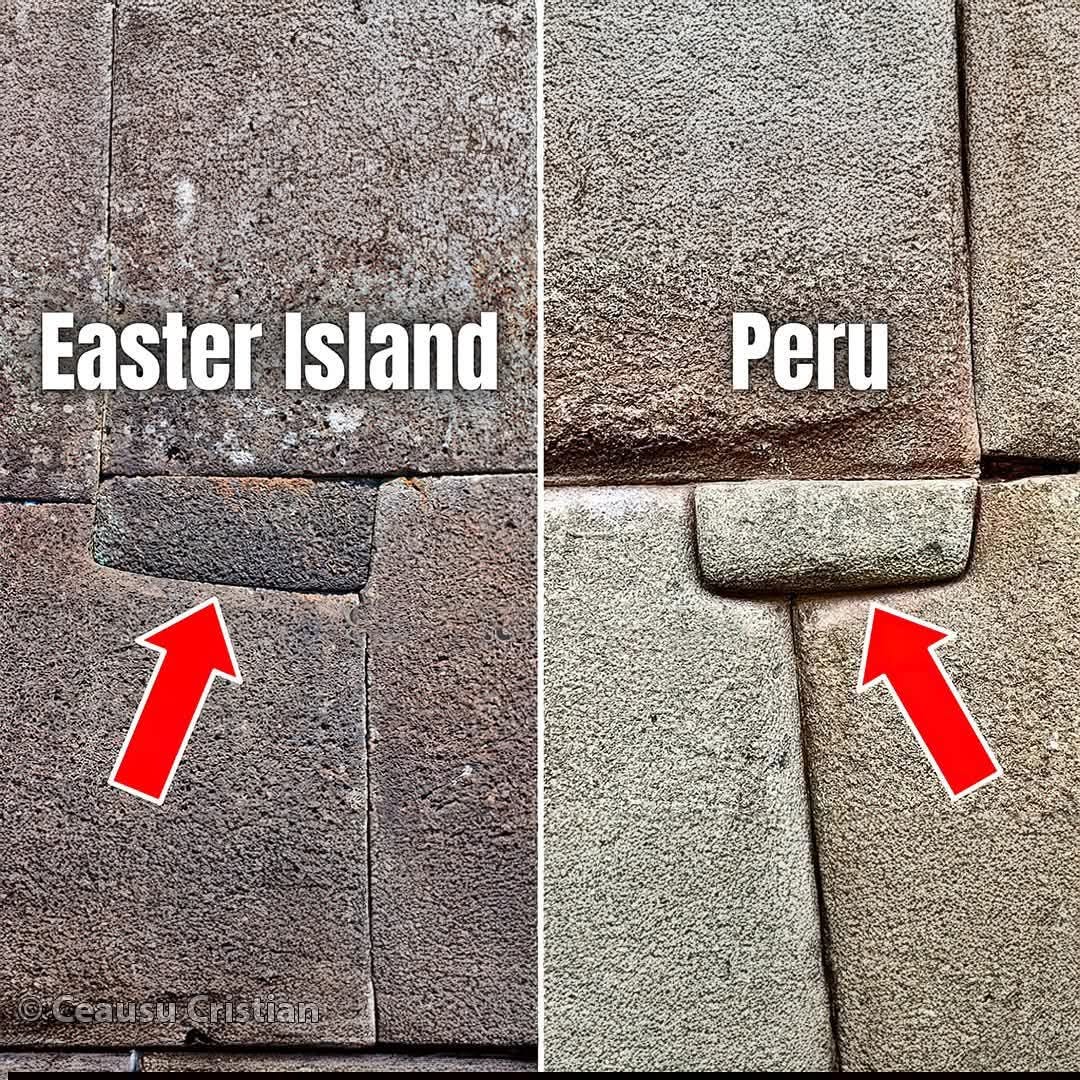
The conventional explanation is practical: projecting sections of stone may have functioned as handling bosses, giving ropes, levers, or workers a place to grip blocks during transportation and final positioning. Similar bosses on Andean masonry are frequently interpreted as remnants of the construction process. Some could have been intentionally left unfinished after the surrounding stone face was smoothed.
Frequency Wave Theory suggests a possible second function: these rectangular forms may have acted as mechanical frequency couplers. Instead of striking the broad face of a block, builders could strike or vibrate the protrusion, concentrating mechanical energy at a controlled location. The resulting waves would travel through the stone, revealing its resonance, hidden fractures, contact pressure, and the points where further shaping was required.
Their placement near joints may have been especially useful. When two stones are pressed together, vibration travels differently through tight contact points than through gaps. A builder touching, tapping, or listening at the protrusion could potentially detect whether neighboring blocks were properly seated. Controlled vibration could also momentarily reduce static friction, helping workers make tiny alignment adjustments without requiring the stone to become weightless.
The FWT solution is therefore not that the protrusions prove a lost worldwide civilization. It is that different stoneworking cultures may have discovered the same physical principle: a raised stone key can serve as a grip, an impact terminal, and a diagnostic vibration node. The hypothesis can be tested by scanning surviving examples, mapping their resonant modes, and comparing blocks with and without protrusions.


