

Imagine the early solar system like a bunch of kids running around a playground before everyone found their own spot. New computer simulations tested 122 possible early solar systems and found that Jupiter’s and Uranus’s moon systems are surprisingly easy to mess up during close encounters between giant planets. The researchers found that scenarios containing one or two additional ice-giant planets can better reproduce important parts of what survived, with those extra worlds eventually being thrown completely out of the solar system.
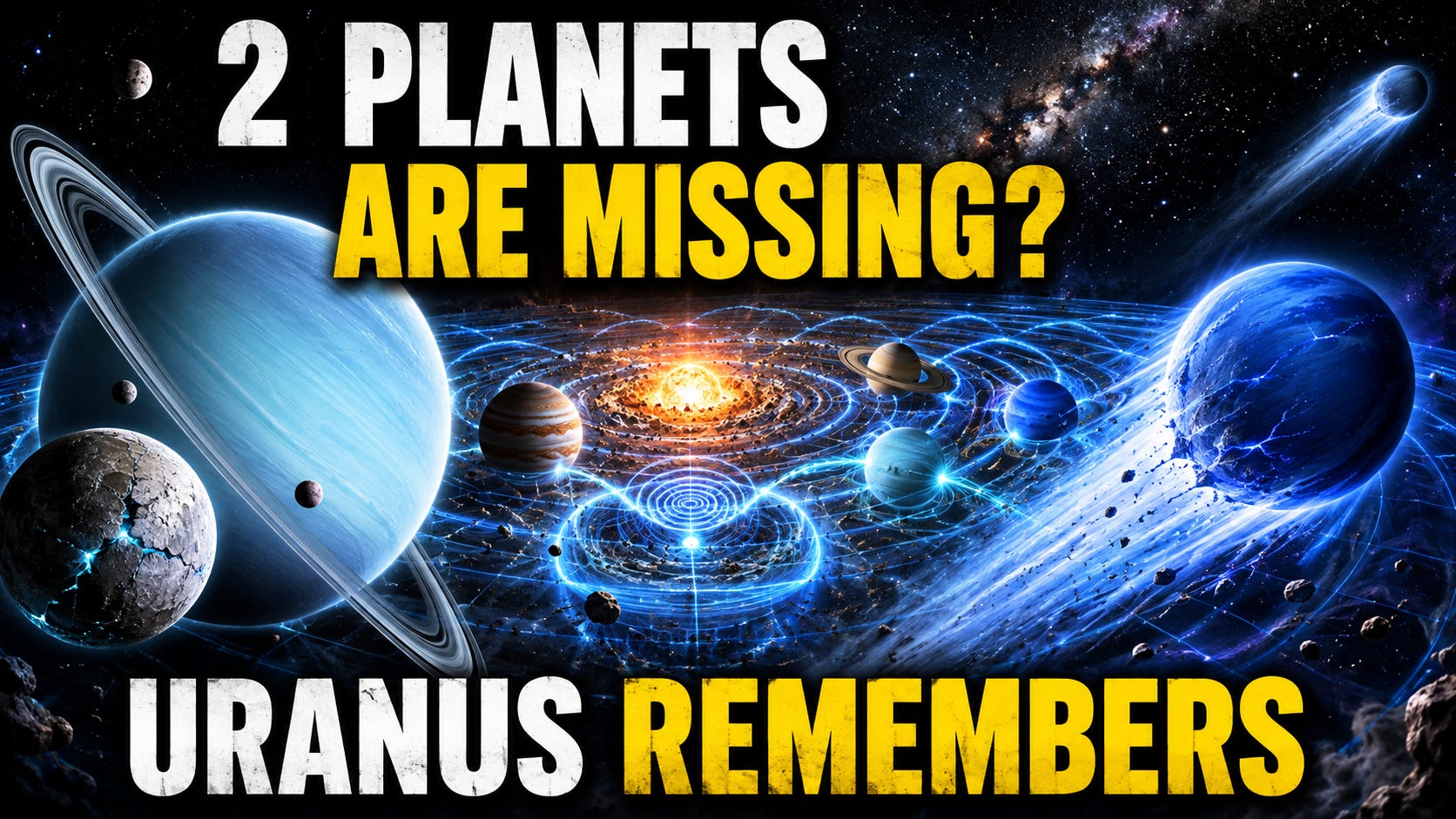
In Frequency Wave Theory, planets do more than simply pull on one another with gravity: every giant world creates a huge moving pattern in the underlying cosmic wave-field. Put several giant planets close together and their gravity/frequency patterns overlap, creating gigantic resonances that can transfer energy and momentum between worlds. One planet can gain enough orbital energy to be launched outward while the others settle into new stable positions. The strange arrangement and history of Uranus’s moons could therefore be thought of as fossil wave patterns—surviving evidence of an enormous resonance event that may have literally kicked one or two planets out of our solar system.


